


The Last, Loveliest Hurrah: Why I Begin Autumn in September
Sep 4
14 min read
Updated: Sep 6
A love letter to Midwest fall, the beauty of change, and the autumn of a life well lived
Before the calendar says a word, I can feel autumn slipping in on the edge of the morning—the air cool against my cheeks, the grass wet and silver beneath my feet, and the faint scent of woodsmoke braided with damp leaves. The light softens, spilling across the porch like honey, while the wind rustles through cornfields and maples as if the whole Midwest has begun to whisper, “Come closer. Pay attention. Something beautiful is changing.”
Not long ago, I saw a post on social media reminding everyone that it was “not autumn yet.” Technically, the post was right. The calendar had not turned to the equinox. Summer still had a few official days left to spend. But I smiled, because the very same post was overflowing with autumn—amber leaves, pumpkins, plaid blankets, steaming mugs, golden candles, and all the cozy promises of the season. It seemed to say, “Do not call it autumn,” while whispering autumn with every image. I decided not to argue with the calendar; I simply lit another cinnamon candle and let it believe it had won.
I understood completely. I am an autumn girl. I have been one for as long as I can remember. Growing up in the Midwest taught me to recognize the season before the calendar gives permission: in the slant of the afternoon sun, in the first cool breath through an open window, in the dry rustle at the edge of a cornfield, and in the one maple branch that begins blushing while the rest of the tree is still green. As soon as September arrives, I am posting autumn aesthetic vibes. My heart has already crossed the threshold.
“The calendar may name the season, but the heart knows when autumn has arrived.”

September Is My Invitation
September does not need to be fully autumn to awaken my autumn spirit. It is the doorway, the held breath, the soft beginning. The mornings arrive with a little more silver in them. The grass is jewelled with dew. Shadows stretch longer across porches and sidewalks. By evening there is often a chill just sharp enough to make me reach for a cardigan and feel grateful for its familiar weight around my shoulders.
Of course, autumn weather in the Midwest has a playful streak. More than once, I have left the house in the morning wearing a sweater, added a coat by lunchtime, carried the coat by midafternoon, and turned on the air-conditioning before supper. Around here, dressing for a September day is less a fashion choice than a small act of meteorological faith. Still, I happily bring out the flannel, boots, and scarves—because autumn fashion is really just the art of wearing a blanket in public and calling it an outfit.
Then come the small rituals. I set out a bowl of apples. I light a candle that smells of clove, cedar, or cinnamon. I trade summer’s bright colors for rust, cream, moss, and burgundy. I begin dreaming of soup simmering on the stove and bread warming in the oven. I notice pumpkins gathered at roadside stands, chrysanthemums opening in generous mounds, and geese rehearsing their ancient, arrow-shaped journey overhead. None of this feels premature to me. It feels like welcome.
Perhaps my eagerness comes from knowing how quickly the season moves. Autumn in the Midwest is not a long, lazy chapter. Some years it is a handful of luminous weeks between the last heavy warmth and the first hard freeze. One day the trees are aflame; the next, a storm strips the branches bare. One afternoon we walk beneath a blue sky in light sweaters; soon after, the wind has teeth. Autumn teaches urgency without panic. It says: look now. Go outside now. Love this now.
The Midwest Puts on Its Crown
There is no spectacle quite like a Midwestern landscape surrendering to color. The green canopy begins to loosen its hold, and little by little the countryside becomes a stained-glass window. Maples burn scarlet and orange. Birches lift their yellow coins into the sunlight. Oaks deepen into bronze, russet, and wine. Sumac flashes crimson along the roadside, while fields turn tawny beneath a sky that somehow looks bluer for having gold beneath it.
The light itself changes. Summer light is bold and overhead; autumn light arrives at an angle, pouring honey across kitchen tables and making ordinary dust sparkle. It rests on barns, silos, fences, and weathered sheds with such tenderness that even familiar places appear newly blessed. A country road becomes a ribbon through flame-colored woods. A lake holds an upside-down forest in its dark mirror. At sunset, the whole horizon seems brushed with copper.
And then there are the sounds: leaves skittering across pavement, acorns tapping a roof, migrating birds calling from the sky, a rake drawing soft lines through the yard, children laughing as they disappear into a pile of leaves. We hear football games from open windows and the distant hum of harvest machinery moving through fields. At night, the wind travels through dry cornstalks with a papery hush. Autumn is never silent, but its music is gentler, earthier, closer to a whisper.
The season has a fragrance all its own: damp leaves after rain, woodsmoke drifting from a chimney, apples cut open on a wooden board, cinnamon rising from a warm kitchen, and the clean mineral scent of cold air. There is the sweetness of cider, the richness of squash, the comfort of chili, stew, and roasted vegetables. There are caramel apples that stick to our teeth, pumpkin bread sliced thick, doughnuts dusted with sugar, and hot drinks cradled between chilled hands.
Autumn tastes like comfort made visible: the crackle of an apple’s skin beneath my teeth, the bright tartness of its juice, and the buttery crumble of a warm cider doughnut dusting my fingertips with cinnamon sugar. It is soup rich with roasted squash and sage, pumpkin bread warm from the oven, and chili simmering beneath fragrant clouds of tomato, pepper, and cumin. Outside, the wind may rattle the windows, but around an autumn table every bowl warms the hands, every bite slows the moment, and hunger becomes another reason to gather close.
Autumn asks us to touch the world: the smooth curve of a pumpkin, the rough bark of an old oak, the crisp edge of a newly fallen leaf, the softness of a wool scarf, the warm ceramic of a favorite mug. It asks us to walk slowly enough to hear leaves crunch underfoot and to bend down for one perfect leaf because its veins look like rivers and its colors seem impossible.
“Autumn is a second spring when every leaf is a flower.” — Albert Camus

All the Beautiful Things
What do I love about autumn? I love the first morning that asks for a jacket. I love fog hovering over fields before sunrise. I love orchards and apple baskets, pumpkin patches and hayrides, roadside stands and farm markets. I love porches dressed with gourds, lanterns glowing at dusk, and wreaths woven from wheat, berries, and leaves. I love flannel, boots, quilts, bonfires, and the way a blanket becomes an invitation to stay awhile. And I love the annual autumn tradition of buying the perfect pumpkin, carrying it proudly to the porch, and then pretending not to notice when the neighborhood squirrels begin reviewing it as their seasonal buffet.
I love trees reflected in still water, the moon rising earlier, the stars seeming clearer, and the first frost drawing delicate feathers across a window. I love the harvest moon hanging low and golden above dark fields. I love mums in copper pots, sunflowers bowing their heavy heads, asters offering one last blue-purple bloom, and milkweed pods opening to release their silken seeds.
I love homecoming parades, marching bands, Friday-night lights, and neighbors talking across fences as they clean their yards. I love the harvest gathering people to tables. I love recipes written in a mother’s or grandmother’s hand, brought out again when the weather turns. I love that autumn can be festive without being frantic, abundant without being showy. Its pleasures are often simple: a walk, a bowl of soup, a shared story, a chair near a window.
And no Midwest autumn would feel complete without watching the Green Bay Packers. There is something wonderfully seasonal about settling in on game day, wrapped in green and gold, with snacks within reach and hope rising with every kickoff. The trees may be turning red and orange outside, but inside, the only colors that truly matter are green and gold—and depending on the score, I may experience every season of emotion before halftime.
Autumn also brings back some of our favorite television shows, adding another cozy ritual to the season: settling in after dark, pulling up a blanket, and returning to familiar stories and characters. For me, that means Chicago P.D. I promised myself I would not mention Chicago P.D.—or Beghe—in this post, and yet here we are. Perhaps it is not officially autumn yet, but it is official: I am a true fan now. So much for that promise.
Most of all, I love the permission autumn gives us to come home—to our houses, to our people, and to ourselves. Summer pulls us outward, toward long days and wide-open calendars. Autumn gathers us in. We close the windows a little earlier. We turn on lamps. We cook food that takes time. We sit closer. The dark arrives sooner, but instead of feeling only like loss, it can feel like shelter.
On certain October afternoons, I step outside and the whole world seems close enough to touch. Sunlight warms one side of my face while the breeze cools the other, carrying the mingled scent of crushed leaves, distant woodsmoke, and earth darkened by rain. Under my boots, maple leaves crackle like small flames; above me, branches click softly together, and a lone crow calls across the fields. I can taste the last sip of spiced cider, tart and sweet, and feel its warmth lingering in my chest as a red leaf lands in my open palm—thin as paper, veined like an old hand, and astonishingly alive with color. In that moment, autumn is not merely something I see. It is something I breathe, hold, hear, and carry within me.
Trees Are So Much Like Us
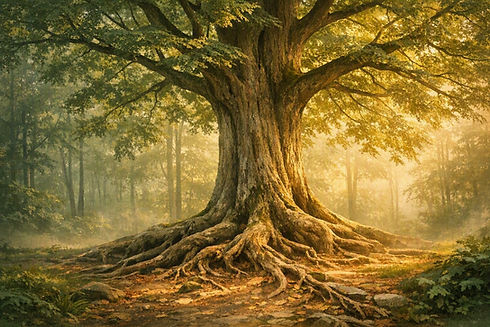
Every year, the trees tell the same story, yet I never tire of hearing it. They have spent spring unfolding and summer giving—making shade, sheltering birds, cradling nests, filtering light, and standing through heat, thunder, and wind. By autumn, they do not pretend to be in spring. They do not apologize for changing, or grieve that their blossoms are behind them. Instead, they gather every season they have endured and turn it into color. Their brilliance feels almost like testimony: proof that what has weathered the storm can still become beautiful, and that a life which has given so much may yet have its most breathtaking revelation ahead.
Trees are so much like humans. We, too, have seasons of budding, blooming, sheltering, bearing fruit, and letting go. We carry rings within us that no one else can fully see: years when love widened us, years when sorrow hollowed out a quiet place, years of drought when we survived on almost nothing, and years of abundance when our branches could hardly hold all the joy. The scars in our bark do not make us less whole; they mark the places where life entered us deeply. Our strength is not the absence of weather. It is the tenderness that remains after the storm, the courage to keep putting out leaves, and the instinct to bend toward the light even when part of us still remembers the dark.
The changing leaf is not becoming something foreign to itself. Its green simply recedes and reveals the pigments that were present all along. I find that breathtaking. Perhaps age does something similar. We spend our younger years building, proving, hurrying, and trying to become, often covering our truest colors beneath duty and expectation. With time, some of that green urgency fades, and what has always lived within us—wisdom earned through pain, tenderness protected through disappointment, courage tested by loss, humor rescued from hard days, faith, gratitude, and the stubborn capacity to love—comes forward in richer color. We are not fading; we are being revealed.
And when the trees let go, they do not drop every leaf at once. One leaf loosens, then another. The wind helps. Rain helps. Time helps. There is mercy in that gradual release. We also let go in layers—of roles we have outgrown, expectations that no longer fit, old disappointments, possessions, plans, and versions of ourselves we once needed in order to survive. Some leaves fall easily; others cling through the first frost. So do some memories, some griefs, some names we still whisper. Letting go is not forgetting, and it is not defeat. It is making room in the heart without denying what once grew there. It is trusting that love can remain even after its visible season has passed.
“How beautifully leaves grow old. How full of light and color are their last days.” — John Burroughs
Still, the bare tree is not empty. Beneath the ground, roots hold firm, intertwined with darkness, memory, and the hidden nourishment of all that has fallen before. Inside each branch, life keeps its quiet promise. The tree does not know how severe the winter will be or which limbs the cold may take, yet it releases what it cannot carry and trusts what remains. That trust moves me because it resembles hope at its most honest—not the certainty that nothing will be lost, but the belief that loss is not the whole story. It reminds me that rest is not the end of usefulness, that a quiet season is not a wasted one, and that even when nothing is blooming, unseen life may be gathering the strength to begin again.

At Sixty-Eight, I Am in the Autumn of My Life
At age sixty-eight, I realize that I am in the autumn of my own life. There are more years behind me than there are in front of me. I can say that plainly now—not with despair, but with the clear-eyed tenderness autumn has taught me. The horizon is closer than it once seemed. Because of that, the light has become more precious.
I have lived through springs of beginning: first dreams, first loves, first brave steps into an unknown future. I have known summers of work and responsibility, of raising, building, tending, striving, and giving. Those years were full and bright, sometimes exhausting, often beautiful. Now I feel the season changing within me. I am more aware of time, but also more able to inhabit it.
And though I am in the autumn of my life, I am not finished beginning. The spring within me is still alive—still curious, still hopeful, still ready to push through the soil and bloom again. There are new things I want to try, new dreams I am willing to welcome, new friendships, adventures, ideas, joys, and perhaps even a new love waiting to unfold. Love, after all, does not always arrive in spring. Sometimes it comes like an unexpected warm breeze in late October, stirring leaves we thought had settled and coaxing one more blossom from a branch that still remembers how to bloom. My heart has not closed simply because the years have passed; it remains open to the possibility of being surprised, cherished, and awakened in ways I cannot yet imagine. Autumn may describe the season of my years, but it does not limit the season of my spirit. Deep inside, tender green shoots remain, reminding me that we are never too old to start over, learn something new, love again, or turn our faces toward the light.
There are losses in this season of life, just as there are losses in autumn. Some people I loved are no longer here to walk beside me. Certain possibilities have narrowed. The body keeps its own calendar and asks for patience. Memories can feel near enough to touch, then disappear around a bend. Yet sorrow is not the only color of this season. Grief may be one branch, but gratitude is the whole tree.
At sixty-eight, I know better what deserves my attention. I know that love should be spoken, forgiveness offered, stories saved, recipes shared, photographs labeled, and ordinary afternoons noticed. I know a hand held across a table can matter more than a room full of applause. I know joy does not always arrive as fireworks; sometimes it is sunlight on a wall, a familiar voice on the telephone, clean sheets, a cardinal in the yard, or the first red leaf of September.
I no longer need every season to last forever in order to love it. In fact, its passing is part of what makes it dear. The autumn of life can be radiant because it is honest. It does not hide time; it lets time show. Silver hair, softened hands, lines around the eyes—these are not failures of summer. They are the rings in the trunk, the autumn colors, the visible witness that we have stood in sunshine and storm.
Perhaps that is why fall touches me more deeply now. I do not merely see beauty in the trees; I recognize myself in them. I understand their brilliance before the long quiet. I understand the dignity of releasing what is finished. I understand the courage it takes to stand exposed and still trust the roots. And I understand that a later season can hold a beauty impossible in the beginning.
My Last Hurrah Before Winter
After autumn in the Midwest comes winter, and often it comes brutally. We know the drill: snow piled at the curb, wind chills that sting the face, cars reluctant to start, darkness arriving before supper, and mornings when the world feels made of iron. Winter has its own austere beauty, but it demands endurance. That is why autumn feels like my last hurrah—my final outdoor celebration before the doors close, the deep cold settles in, and putting on enough layers to take out the trash begins to feel like packing for an expedition.
When winter finally takes over, I cocoon indoors, wrapped in blankets and admiring the snow from the sensible side of the window. In that way, I become much like the chipmunks I faithfully feed through spring, summer, and fall: we both spend the warmer months preparing, and then disappear when the cold arrives. They retreat underground with cheeks full of seeds; I retreat to the sofa with snacks, a remote control, and no intention of resurfacing until the thermometer apologizes.
I want to hang on to autumn, not by trying to stop it, but by being present for it. I want to take the long way home because the road curves beneath a canopy of gold. I want to pause on the porch when the air smells like leaves and rain. I want to watch one tree day by day until its green becomes fire and its fire becomes a lacework of bare branches against the sky.
I want to gather the season in all the ways a human being can gather anything: through attention, memory, photographs, meals, walks, and conversations. I want to press a leaf between the pages of a book. I want to taste an apple so crisp it seems to contain the weather. I want to sit beside a fire and hear someone tell a story I have heard before. I want to look around the table and realize, while everyone is still there, that this is the good part.
To hang on does not mean to clutch. Autumn itself shows us a gentler way. The leaves hold until their moment, glow as brightly as they can, then fly. So I will hold this season with open hands. I will enjoy it deeply and release it when I must. The goal is not to make October stay. The goal is to let October change me.
“No spring nor summer beauty hath such grace as I have seen in one autumnal face.” — John Donne
An Invitation to Fall in Love
If you have been rushing past autumn, consider this your invitation to stop. Step outside before the day is over. Find a tree that has begun to change and really look at it. Notice where green gives way to yellow, where orange deepens into red, where sunlight makes a single leaf translucent. Listen for the wind. Breathe the cool air. Let the season remind you that beauty does not require permanence.
Make something warm. Call someone you love. Walk through leaves instead of around them. Visit an orchard, a farm stand, a park, or simply your own backyard. Watch the sunset arrive earlier and do not complain that the day is short; be grateful you noticed the light. Let the season sharpen your senses and soften your heart.
Autumn does not ask us to deny winter. It asks us to love what is here before winter comes. It reminds us that change can be colorful, maturity can be magnificent, and letting go can be an act of trust. It teaches that a life need not be at its beginning to be beautiful. Sometimes the richest colors appear after the long work of growing is done.
So yes, now that September has arrived, I will post the pumpkins, the plaid, the candles, the copper leaves, and every autumn aesthetic vibe my heart desires. Someone may remind me that it is not autumn yet. I will smile and keep celebrating. For those of us who have learned how fleeting the season is, anticipation is not impatience. It is gratitude arriving early.
And at sixty-eight, with more years behind me than before me, I will love autumn without apology. I will receive its bright days as gifts, honor its shadows, and stand among the trees remembering that growing older can mean growing more fully into one’s true colors. Let winter wait beyond the horizon. This is autumn—my last, loveliest hurrah—and every scarlet maple and golden birch offers the same quiet lesson: hold close what matters, release what is finished, and do not miss the beauty falling all around you.
What is your favorite season? Share the sights, scents, traditions, or memories that make it feel like home.
Comments