



Chicago P.D. Season Concept: The Mirror Unit
9 hours ago
29 min read
A working idea for integrating criminal profiling into Intelligence and building a team that thinks more like Hank Voight

CHICAGO P.D. -- "Demolition" Episode 1401 -- Pictured: (l-r) LaRoyce Hawkins as Officer Kevin Atwater, Jason Beghe as Sergeant Hank Voight -- (Photo by: Lori Allen/NBC)
October 7, 2026
What Intelligence Was—and What Voight Will Make of It
From my perspective, Chicago P.D. is entering the kind of season that could redefine Intelligence. Halstead and Upton are gone. Atwater is preparing to leave. The familiar voices that once challenged Voight, restrained him, and forced him to defend every dangerous choice are disappearing one by one. To everyone else, the unit may look depleted. Voight sees an opening. For the first time in years, he has the chance to decide exactly what Intelligence becomes next—and he is not waiting for the department to decide for him. He has begun to understand his own darkness, not as something he has defeated, but as a weapon that must be controlled by people strong enough to stand near it. Instead of simply filling vacancies, he quietly studies the officers around him, chooses the instincts he wants in the room, and builds a team capable of going where the old unit repeatedly fractured. Fans would watch the season unfold without immediately knowing how much of the change Voight has planned. What first appears to be ordinary turnover would gradually reveal itself as something colder and far more deliberate: Hank Voight is not replacing Intelligence. He is rebuilding it in his own image—and this time, he intends to make sure the team can survive him.
The season would introduce criminal profiling as a practical street-level weapon rather than an outside specialty reserved for serial offenders. Intelligence would use it against robbery crews, traffickers, corrupt officials, gang leaders, witnesses, informants, and victims under pressure. They would study abandoned phones, altered routes, unnecessary threats, missing objects, and rehearsed statements, looking for the choice buried inside every detail. What they would not realize—at least not at first—is that Voight is running a second investigation at the same time.
While the team profiles the people in front of them, Voight profiles the people standing beside him. He watches who notices the detail no one else sees, who hesitates when an order has no clean ending, and who becomes sharper when the room turns dangerous. He pairs officers whose instincts should clash and waits to see whether they break each other or become more effective. He gives an order with one piece missing, then studies who fills the silence with caution, aggression, empathy, or ambition. Sometimes he allows a mistake to breathe longer than he should, not because he has missed it, but because pressure reveals what conversation never will. Every case becomes an audition no one knows they are taking.
Voight keeps the plan to himself. To Burgess, it looks like a new emphasis on preparation. To Ruzek, it feels like the old rhythm returning—short orders, hard trust, no wasted movement. To Torres and Imani, it feels like Voight is giving them room to become the officers he already suspects they can be. Even Platt may see only part of it. But names begin to appear on cases before assignments are official. Certain officers are repeatedly placed where their personal history will become an advantage. Others find themselves pushed toward a line, then quietly pulled back before they cross it. By the time the pattern becomes visible, Voight has already learned what he needed to know: who can enter the darkness without freezing, who can come back without lying to themselves, and who will protect the unit when protecting it costs something. Intelligence believes it has been learning to predict criminals. The harder truth is that Voight has been deciding, case by case, who belongs in the team he intends to build—and by the time they understand the test, they have already revealed exactly how far they are willing to go.
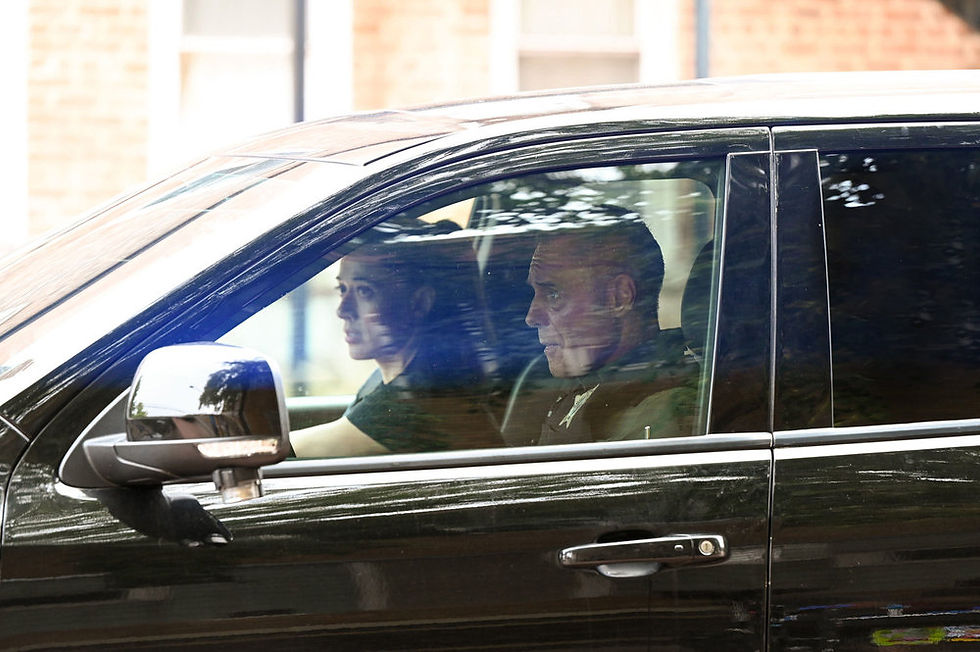
CHICAGO P.D. -- "Demolition" Episode 1401 -- Pictured: (l-r) Marina Squerciati as Officer Kim Burgess, Jason Beghe as Sergeant Hank Voight -- (Photo by: Lori Allen/NBC)
October 7, 2026
The Mirror Unit
“The Mirror Unit” would be an unofficial name for Voight’s redesigned Intelligence team. Its operating principle is simple: investigators catch dangerous people by becoming a controlled reflection of them. Each member is capable of entering an offender’s logic without mistaking that logic for truth. They can understand why a suspect sees betrayal as justice, why a witness would rather risk prison than appear weak, or why a crew leader would destroy a profitable operation to punish one act of disrespect. The unit does not merely collect behavior after the fact. It uses behavior to forecast decisions.
This approach would make the team feel aligned with Voight without making everyone identical. One officer might understand greed, another shame, another addiction to control, and another the mechanics of deception. Their strength would come from overlapping perspectives. In a briefing, they could argue over whether a suspect is running, hunting, testing boundaries, or protecting someone. Voight would listen, combine the competing readings, and make the call. The scenes would give profiling a dramatic shape: not a lecture from one expert, but a battle of interpretations among people who recognize different versions of darkness.
Mindhunter provides a useful point of comparison because it popularized the idea of investigators studying patterns, motives, and behavior to understand violent offenders—the same principle Voight has followed instinctively for years. He has always known that behavior leaves evidence and that what a person fears, protects, or needs can reveal what they are likely to do next. Now, with Intelligence changing around him, he sees an opportunity to turn that private instinct into the organizing principle of the entire unit.
The season could also suggest that some of the strongest profilers are not those who study darkness from a safe distance, but those who have walked through it and learned what it costs. Voight has spent years confronting the worst parts of himself, while many of the officers now around him carry their own histories of violence, divided loyalty, trauma, secrecy, or survival. That does not make them automatically right, and it does not excuse the lines they may cross. It gives them a recognition others may lack—the ability to look at someone in a dangerous place and understand not only how they got there, but what might pull them deeper or lead them back out.
Beyond a Street Cop’s Instinct

October 7, 2026
Most experienced cops learn to read a room. They recognize fear, spot a lie, sense when a witness is holding something back, and know when a suspect is preparing to run. That alone does not make Voight or Intelligence exceptional. What separates them is what they do after the instinct arrives. Voight does not merely read behavior; he turns it into leverage, tests it under pressure, and builds an operation around the response. He will alter the balance inside a gang, threaten the one relationship a suspect cannot afford to lose, or deliberately make someone feel safe enough to expose the truth. Ordinary police work reacts to behavior. Voight engineers the conditions that force behavior into the open.
The rebuilt Intelligence Unit takes that method further than Voight ever could alone. He selects officers who can each recognize and manipulate a different human pressure point—loyalty, shame, survival, faith, fear, control, or the need to belong—then combines their readings before the target realizes there is a pattern. One officer identifies the wound; another predicts the reaction; another creates the pressure; another recognizes when the result has become dangerous. The bold difference is coordination. This is not a room full of good cops following their gut. It is a unit constructed to treat human behavior as an active crime scene, with Voight directing the pressure from the center. What looks from the outside like instinct is actually a controlled system—and what looks like ordinary turnover is Voight assembling it piece by piece.
How Voight Forges Them into a Unit
Voight does not rebuild Intelligence as a collection of lone operators. He chooses officers whose instincts sharpen one another, pairs them according to what each case demands, and makes every profile the responsibility of the whole unit. Ruzek brings instinct and loyalty, Burgess discipline and consequence, Torres an understanding of belonging, Imani controlled intensity, and Platt the memory and connections that keep them grounded. If one officer applies pressure, the others protect the witness, preserve the evidence, and prepare for the fallout. Over time, they learn to read one another as quickly as they read a suspect, becoming formidable not because they think alike, but because Voight has taught them how to turn their differences into one coordinated response.
Voight as the Integrator
Voight’s place in this version of the show would be more than commander or final authority. He becomes the integrator: the person who can hear four incomplete psychological readings and recognize the piece each one is missing. He does not need to be the most formally trained profiler. His advantage is lived experience. He has watched people bargain with consequences for decades. He knows that fear can look like anger, guilt can look like loyalty, and apparent courage can be a refusal to imagine tomorrow. The new team gives language and structure to the instincts he has always used.
However, the unit still needs one genuine counterweight. This person should not be written as another spotless rule-follower whose only function is to object to Voight. Instead, they are an evidence-centered skeptic who understands profiling but distrusts certainty. They ask what observation would disprove the team’s theory, whose behavior has been ignored, and whether the profile describes the suspect or merely resembles an officer’s personal history. Voight keeps this person because he knows that a team of people who think like him could become unstoppable in the wrong direction. The skeptic does not weaken the unit. They make its instincts admissible, repeatable, and harder for an enemy to manipulate.
Season Antagonist: The Cartographer
The principal antagonist could be known inside the investigation as “the Cartographer,” not because of maps left at crime scenes, but because this person maps institutions and human reactions. The Cartographer studies old Intelligence cases, complaint histories, court records, informant patterns, and media reports. They know which kinds of victims pull Voight into personal involvement, which officers rush when a child is endangered, and which apparent betrayals divide the team. Rather than trying to disappear, the antagonist designs crimes to make Intelligence arrive at the wrong conclusion quickly.
The Cartographer’s strategy exposes the season’s central danger: people who think alike can move with incredible speed, but speed makes them predictable. Early cases appear to prove the Mirror Unit’s superiority. Arrests happen before planned crimes, hostages are recovered, and crews turn on one another exactly as anticipated. Gradually, however, the team realizes that someone is feeding them behavior selected to trigger their preferred interpretations. A false display of dominance pulls the Pressure Forecaster toward one location. Carefully borrowed language convinces the Language Reader that a witness is rehearsing a lie. A staged hierarchy deceives the Social Chameleon. The antagonist is not merely escaping the profile; they are writing it.
Weekly Episode Engine
Each episode can begin with a crime that appears straightforward but contains one behavioral contradiction. A robber takes less money than expected. A kidnapper gives a deadline but never makes a demand. A witness lies about something that does not protect the suspect. Intelligence identifies the contradiction, develops competing profiles, and tests them in the field. The team’s first interpretation should often produce a real success while also revealing a deeper layer. This keeps profiling from functioning as magic. It becomes a hypothesis that creates action, consequences, and new evidence.
Possible episode seeds include a robbery crew whose violence increases as its profits decline; a respected neighborhood mediator who manipulates rival groups into eliminating witnesses; a missing teenager whose online identity was designed to attract one specific offender; a series of home invasions in which the intruder repairs something in every house; and a police leak that appears financial but is actually driven by humiliation. In each case, the behavioral clue should connect to character. The officer who understands the suspect best should also face the greatest temptation to excuse, imitate, or personally challenge that suspect.
Character Conflict and Ethical Stakes
The season should avoid arguing that removing every principled person automatically improves Intelligence. A more convincing idea is that Voight replaces passive restraint with active self-knowledge. These officers are not innocent about what they are capable of. Their conflicts arise over which compromises produce results, which merely satisfy anger, and who pays when a psychological theory is wrong. One officer may manipulate an informant’s fear to prevent a murder, while another quietly documents the manipulation because the tactic could later destroy the case. Both choices can be understandable. The drama comes from consequences rather than from assigning one character the role of morality and another the role of effectiveness.
The most personal tension emerges when the team begins profiling itself. The Language Reader recognizes that a colleague is concealing a mistake. The Behavioral Architect notices that Voight has designed an operation around an outcome he wants rather than the facts he has. The Social Chameleon realizes that someone is performing loyalty instead of feeling it. Once these officers have seen how the others think, ordinary privacy becomes difficult. Trust no longer means believing that a teammate has no secrets. It means believing that the teammate’s secrets will not be used as leverage.
The “Boy Scouts” Voight Has Lost
The phrase “Boy Scouts” does not mean these officers were weak, naïve, or incapable of crossing lines. Jay Halstead, Hailey Upton, and Kevin Atwater all operated in morally gray territory, and each could be forceful when a case demanded it. What separated them from Voight was the point at which they believed a result stopped justifying the method. Their departures did not happen all at once; they unfolded across different seasons, gradually changing the balance of Intelligence and giving fans time to feel each absence before the next one arrived. That matters because all three became fan favorites for different reasons, and leaving the door open for them to return keeps the history of the unit alive. Halstead and Upton’s return for the One Chicago crossover showed how powerful it can be to see familiar faces step back into that world, even briefly. Those appearances do not undo why the characters left. They remind viewers that former members can still matter to Voight, to the current team, and to the audience. Over time, each of these three officers became a different kind of limit on Voight’s old-school approach. Their exits can therefore be treated as more than cast changes: together, they mark the gradual loss of the people most willing to ask whether Intelligence was solving a crime or merely becoming better at controlling the outcome.
Jay Halstead: The Good Soldier Who Could Not Become Voight
Halstead may be the clearest example of the “Boy Scout” role because he repeatedly tried to reconcile loyalty to the unit with a belief that police work needed a defensible line. His military background made him comfortable with danger, command, and decisive action, but it also gave him a strong need to understand the mission. Voight could act first and absorb the consequences later. Halstead needed to believe that the action itself still belonged to the person he wanted to be. Their conflict was never simply rule-follower against rule-breaker. It was a struggle between two forms of responsibility: Voight’s belief that the leader carries the sin so others can go home, and Halstead’s belief that no leader has the right to make that moral choice for everyone else.
Halstead’s departure works as the first major warning about becoming too much like Voight. In his final Intelligence case, he went off the books, killed a suspect after a confrontation escalated, and was immediately offered the kind of protective story Intelligence had used before. Instead of accepting it, he resigned and returned to military work overseas. Dramatically, that choice suggests that Halstead did not leave because he was incapable of operating in Voight’s world. He left because he discovered he was capable of it. A new season can use that absence as part of Voight’s reasoning: the person he once hoped might succeed him could not remain beside him without becoming someone he no longer recognized.
Hailey Upton: The Officer Who Understood Voight Too Well
Upton is a more complicated “Boy Scout” because she often understood Voight’s methods from the inside. She was capable of obsession, secrecy, and choices that could not be cleanly defended. At times, she did not merely tolerate Voight’s world; she entered it. That made their clashes more personal. Halstead often challenged the legitimacy of a method. Upton was more likely to recognize why the method worked and then fear what accepting it revealed about her. Voight saw her potential and protected her, but his protection could also become control. The closer she came to his way of operating, the more urgently she needed an identity that was not defined by him, Halstead, or Intelligence.
Upton’s eventual decision to turn in her badge and pursue a new life can be used as the second warning in Voight’s history. Halstead fled after recognizing what he might become; Upton left after recognizing how completely the unit had shaped her. Her later return in the wider One Chicago story need not erase that lesson. It can sharpen it. She can look at the proposed Mirror Unit and immediately understand its attraction: a group that stops apologizing for the instincts Intelligence has always relied upon. She can also see the cost before the new members do. If she appears as a guest, consultant, or outside investigator, she becomes uniquely qualified to tell Voight that he has built a team out of the part of himself she had to leave Chicago to survive.

October 7, 2026
Kevin Atwater: The Conscience Rooted in Chicago
Atwater is different from both Halstead and Upton because his limits are tied not only to procedure or personal identity, but to community. He understands the neighborhoods Intelligence polices from more than one side of the badge. When he disagrees with Voight, the question is often who will live with the consequences after the unit closes the case and leaves. He can support aggressive action while still recognizing that fear, distrust, and collateral damage remain in the community. That makes him the last major “Boy Scout” in a more important sense: he insists that effectiveness must be measured beyond the arrest.
With Atwater set to leave during the opening part of Season 14, his exit can become the immediate catalyst for Voight’s redesign of Intelligence. The story should not treat him as simply another obstacle removed from Voight’s path. His departure should expose what the unit loses: institutional memory, credibility in communities that do not automatically trust CPD, and a person who can challenge Voight without needing to defeat him. Atwater’s growing family provides a natural reason to choose a future outside the unit, but his final case could force Voight to confront a harder truth. The officers who restrained him did not leave because they lacked courage. They left because remaining beside him demanded a price they were no longer willing to pay.
What Their Absence Does to Voight
Seen together, the exits create a compelling emotional foundation for the new season. Halstead represented the successor who rejected Voight’s path. Upton represented the protégé who came too close to it. Atwater represents the community-centered conscience now choosing a different future. Voight could interpret this pattern defensively: every time he invests in someone with conventional ideals, that person eventually judges the methods, breaks under the burden, or leaves. His answer is to recruit people who enter Intelligence with their eyes open—officers who already understand pressure, compromise, and the psychology of people who survive outside clean rules.
That interpretation gives the Mirror Unit an emotional motive, but it should not be presented as unquestionably correct. Halstead, Upton, and Atwater can remain present as standards against which the new team is judged. A new officer may succeed where Halstead would have insisted on a warrant, then discover that the shortcut destroyed a witness’s trust. Another may manipulate a suspect in a way Upton would understand but recognize as self-destructive. A third may close a violent case while failing to see the neighborhood consequences Atwater would have anticipated. In this way, the former “Boy Scouts” do not disappear from the story. Their absences become ghosts in the room, reminding Voight that removing resistance can make a team faster while also removing the voices that once told it where the cliff was.
Who Is Left—and the “Agent of Chaos”
As Season 14 begins, the confirmed core around Voight consists of Adam Ruzek, Kim Burgess, Dante Torres, Eva Imani, and Trudy Platt, with Atwater present only long enough to complete his exit story. That leaves a unit with fewer traditional restraints than the one Voight led during the Halstead-Upton-Atwater years. Burgess has become a detective and has a family with Ruzek; Ruzek remains instinctive, loyal, and comfortable acting in the moment; Torres has already shown that secrecy and personal identification can override procedure; Imani arrives with a lone-wolf temperament and a deeply personal secret shared with Voight; and Platt remains the experienced institutional presence who understands both the department and Voight better than most.

October 7, 2026
Adam Ruzek: Voight’s Natural Field Heir
Ruzek is the easiest existing member to place inside Voight’s new philosophy because his loyalty to Voight has always been unwavering. Even when he questions a decision, he understands the old-school code behind it: protect the unit, stand beside your people, and accept that the cleanest answer is not always available. He does not need Voight to justify every instinct before he acts. He reads the urgency of the room, trusts the history behind the order, and commits fully once a direction has been chosen. That loyalty is one of his greatest strengths, but it also creates a useful dramatic risk. Ruzek can recognize when Voight is carrying something alone, yet his first instinct is often to help carry it rather than ask whether it should be carried at all.
That is a large part of why I enjoy Ruzek so much. He feels like the strongest remaining tie to Alvin Olinsky, not because he is a copy of him, but because he carries the same instinctive understanding of loyalty, street judgment, and old-school policing. Olinsky’s absence is still felt in the series. His relationship with Voight helped define the original emotional language of Intelligence: few explanations, complete trust in the field, and the knowledge that either man would place himself between the other and danger. Ruzek preserves a necessary trace of that bond. Whenever he stands beside Voight without turning the moment into a debate over authority, the show recovers some of the feeling of its earliest seasons—rough-edged, personal, and built on trust earned in dangerous situations. That hint of Olinsky is more than nostalgia; it is needed. It keeps Voight connected to the unit’s history and prevents the series from feeling as though every part of its original identity has been replaced.
At the same time, Ruzek is no longer the impulsive young officer who first entered Intelligence. Marriage, fatherhood, repeated injuries, and the loss of his own father have given him more to protect and a deeper understanding of what police work takes home with an officer. His field instincts remain daring, but they now exist beside hard-earned maturity. In the redesigned unit, he can serve as Voight’s natural field heir: the person who understands an incomplete order, adapts during an undercover operation, and can sense when a suspect is about to run, fight, or fold. He also brings emotional glue. Ruzek believes in the unit as a family, and that belief can hold together people whose methods and personalities would otherwise collide. His arc should test whether unwavering loyalty can mature into honest leadership—whether he can remain true to Voight and to the old Intelligence tradition while becoming strong enough to tell Voight when that tradition is endangering the people it was meant to protect.

October 7, 2026
Kim Burgess: The Detective Who Measures the Cost
Burgess brings one of the broadest perspectives in the unit because she has experienced police work from several levels. She began on patrol, learned how quickly a routine call can become life-changing, fought to earn a place in Intelligence, survived violence directed at her personally, and grew into a detective while building a family with Ruzek and Makayla. That history gives her a practical understanding of consequence. She knows how a case looks from the street, how trauma changes a witness, and how fear can make an innocent person appear evasive. She also knows that an investigator’s decision does not end when the handcuffs go on; victims, families, and neighborhoods continue living with what the unit leaves behind.
As a detective, Burgess can become the person who translates the unit’s instincts into a complete case. She is observant without being detached, empathetic without being easily manipulated, and persistent enough to keep working when a fast theory begins to collapse. Her experience with victims makes her especially valuable to a profiling-driven team. Where another investigator may identify what frightens a witness, Burgess can recognize what the witness needs before that fear becomes cooperation. She can also challenge profiles built too heavily around criminal behavior by asking what trauma, coercion, or survival might explain instead. This does not make her soft. It makes her precise.
Burgess has also reached a point where she can disagree with Voight without needing to define herself in opposition to him. At the beginning of Season 13, she was still off the job after losing her badge in the fallout that dismantled Intelligence. When Voight fought to restore the unit, he personally placed that badge back in her hand. The series does not explicitly say that the experience deepened her trust in him, but it offers a strong basis for that interpretation.
Burgess now knows what the badge means after having it taken away, and she knows how far Voight was willing to go to bring his people back. That knowledge could make her both stronger and more clear-eyed: more willing to trust him when the stakes are high, but less likely to follow without understanding what his choices may cost. She has seen his methods save lives, seen them create damage, and learned that moral confidence is not enough unless it produces a workable alternative. In the new Intelligence Unit, she can be the operational conscience rather than the designated “Boy Scout.” She prepares the warrant, protects the witness, sees the weakness in the case, and still enters the dangerous room when necessary. Her long-term value is leadership. If Ruzek carries the emotional tradition of old Intelligence, Burgess represents its ability to evolve into something more disciplined without losing urgency or toughness.

October 7, 2026
Dante Torres: The Vulnerable Mirror
Torres already occupies much of the territory the Mirror Unit needs, but what he brings cannot be separated from what it cost him to survive. His past gang ties are not a convenient piece of backstory or a shadow the badge erased. They are the memory of a younger man who learned too early that belonging could keep him safe and imprison him at the same time. He knows the terrible comfort of being claimed by people who offer protection, identity, and family, then slowly turn that belonging into a debt. That history allows him to understand divided loyalties without reducing them to weakness. When a young suspect refuses to betray a crew, Torres does not see only defiance; he can still feel the fear of losing the only family that person believes will have him. He enters those neighborhoods carrying neither contempt nor nostalgia. He remembers the promises, the pressure, and the price—and he knows how difficult it is to walk away when leaving feels like betraying the person you once had to become in order to survive.
His quiet manner is an investigative advantage, but it also feels like the outward expression of a faith that has carried him when strength alone could not. Torres does not announce what he believes or use faith as proof that he is untouched by his past. His belief matters because he has needed it—in moments of violence, guilt, loneliness, and doubt, when the life behind him felt more real than the future he was trying to build. Faith gives him a place to set down the weight he cannot explain to the team. It reminds him that he is more than the worst room he ever stood in and more than the choices he made before he could imagine another life. That is why his stillness has such force. He can sit across from a frightened suspect without rushing to condemn or rescue them. He understands that silence may be protection, shame may look like anger, and a person can want forgiveness long before believing they deserve it. Within a profiling unit, Torres becomes the investigator who listens for the part of a person that has not yet surrendered.
His greatest strength and his greatest vulnerability are the same: he can see himself in people standing one decision away from losing everything. Every case can become a meeting with a life he might have lived, a choice he might have made, or a version of himself who never found a way out. His history gives him access to that darkness; his faith gives him a reason to return from it. The gang world taught him how quickly belonging can become bondage. Faith taught him that the past may explain a person without having the right to sentence that person forever. Between those truths, Torres has built the man and officer he is still becoming.
That belief also makes his relationship with Voight especially meaningful. Voight sees the usefulness of Torres’s wounds because those wounds open doors other officers cannot enter. Torres, however, has to decide whether understanding someone’s darkness requires him to carry it home. He can become fiercely protective when he recognizes a younger version of himself in a victim or suspect, and compassion can quietly turn into permission. His future in the new Intelligence Unit should be about learning that redemption is not the same as rescue. He cannot save everyone by stepping back into the fire that once consumed him. What he can do is stand close enough for someone else to see a way out.
That is what makes Torres one of the most powerful possible profilers in Intelligence. He does not look at a suspect and see only danger, guilt, or a pattern waiting to be solved. He sees the invisible loyalties that hold a person in place, the fear beneath the anger, and the small part that may still believe another life is possible. He can walk into darkness because he remembers its language. He can find his way back because faith has given him a home within himself. In a unit built to think like the people it hunts, Torres is the reminder that understanding darkness does not have to mean surrendering to it.

October 7, 2026
Eva Imani: The First True Test of Voight’s New Model
Imani may be the most important existing character for this concept because Season 13 placed her and Voight inside a private moral crisis involving her sister. She enters Intelligence without the same need for belonging that shaped many earlier recruits. She is fearless, independent, highly observant, and comfortable acting alone. Rather than waiting for consensus, she trusts her own reading of danger and moves. That makes her valuable in operations where hesitation gives a suspect control, but it also means teamwork may feel to her like interference until the unit proves that collaboration can sharpen rather than dilute her instincts.
Her personal history gives her an instinctive understanding of secrecy, family loyalty, and the choices people make when formal justice feels inadequate. In that way, she is already a mirror of Voight. Both can appear controlled while carrying years of anger beneath the surface. Both are fiercely protective of the few people they allow close, and both can convince themselves that crossing a line is not corruption if it prevents someone they love from being destroyed. Imani is well suited to reading people who have learned to compartmentalize—those who can love one person, betray another, and still believe they are acting consistently. She recognizes the moment a suspect stops protecting a secret and starts protecting an identity because she understands how easily devotion can become justification.
The Season 13 cliffhanger makes that resemblance impossible to ignore. After Imani finally found her sister, Shari, the reunion ended in betrayal, violence, and the discovery that Shari may be responsible for a murder. The season closed without revealing whether Voight would turn over the evidence or protect Imani’s sister, leaving the decision between the two of them. That moment could deepen Imani’s trust in Voight because he does not stand outside her conflict and judge it from a safe distance. He understands the instinct to protect family even when the truth has become dangerous. At the same time, their bond carries a warning: Imani may trust him because she recognizes herself in him, and Voight may protect her because he sees the same darkness looking back. She is not simply another officer he can groom. In many ways, she is his mirrored image—more controlled, less seasoned, but driven by the same belief that loyalty can become its own form of justice. Her strongest future is to decide whether that similarity makes Voight the one person who truly understands her or the person most capable of leading her toward choices she can never take back.
Trudy Platt: The Institutional Memory
Platt does not need to join every operation to remain essential. She has watched generations of officers enter the district believing that aggression means strength, loyalty means silence, and experience grants immunity from consequences. She knows patrol culture, department politics, personalities, procedure, and the unofficial pathways through which police work actually gets done. Just as importantly, she knows when rigid procedure will fail the people it is supposed to protect. That combination allows her to understand Voight’s world without being absorbed by it.
Her contribution to a profiling-based unit can be practical as well as thematic. Platt has spent years watching officers, complainants, supervisors, informants, and frightened civilians pass through the district. She knows who is posturing, who is avoiding a name, who has suddenly changed a routine, and which small piece of gossip points toward a larger conflict. She can notice patterns in people before the case reaches the board upstairs. Her network also gives Intelligence a source of human intelligence that databases cannot reproduce. A desk sergeant heard the argument, a patrol officer noticed the car, or a neighborhood regular stopped appearing. Platt knows whom to call and how to ask without making the inquiry feel official.
Her relationship with Voight gives her a kind of authority no rank alone could provide. She remembers who he was, what he has lost, and how often his certainty has been purchased by someone else. Because she is not trying to replace him or win his approval, she can tell him the truth without turning every disagreement into a contest for command. In the redesigned Intelligence Unit, Platt becomes its anchor and historian. She protects the team from departmental politics, identifies the personal problems that will eventually become operational ones, and keeps the latest crisis in perspective by remembering the crises that came before it. Her presence ties the new unit to the old one in a different way than Ruzek does: Ruzek carries the emotional loyalty of the past, while Platt carries its memory and its lessons.
What Is Actually Known About the New Officer
Current reporting is deliberately limited. The production is casting a new Black police officer as a series regular, and the role has been described as an “agent of chaos.” No character name, rank, backstory, actor, or precise relationship to Atwater has been publicly confirmed. Coverage has treated the casting as connected to the space created by LaRoyce Hawkins’s exit, but the description suggests a contrast rather than a direct replacement. Atwater’s calm authority, honesty, and community awareness are not being duplicated. The new role appears designed to disturb the team’s balance.
A Strong Interpretation: Chaos as Investigative Method
The most useful version of “agent of chaos” is not an officer who behaves randomly. He is an investigator who creates controlled instability to expose hidden relationships. If a crew maintains silence because every member trusts the hierarchy, he makes the hierarchy appear weak. If a suspect depends on a predictable police response, he changes the rhythm of the investigation. He leaks a harmless detail to see who moves, sends two targets conflicting messages, stages visible pressure on the wrong person, or allows himself to appear emotional so an overconfident offender reveals more than intended. His specialty is disruption. He profiles the system around a criminal and then removes the one condition keeping that system stable.
Why Voight Would Choose Him
Voight could recognize that the newcomer has the quality he once tried to teach Halstead and Upton: comfort with acting before certainty arrives. The new officer does not need Voight to persuade him that pressure can be useful. He needs Voight to teach him where pressure should stop. That reversal is important. Halstead and Upton feared Voight would pull them across a line. This character is already across several lines and may see Voight as the only leader experienced enough to give his instincts purpose. Voight’s attraction to him is partly tactical and partly personal. After losing officers who resisted his worldview, he finds someone who appears to validate it.
The relationship becomes richer if the grooming works in both directions. Voight believes he is teaching discipline, but the newcomer learns how to present impulsive choices in the language Voight trusts: protecting a victim, preventing the next crime, or accepting personal responsibility. He profiles his mentor. Before long, he knows which rule Voight will bend, which secret he will keep, and which appeal will make him take ownership of someone else’s decision. The central question is no longer whether Voight can turn this officer into an asset. It is whether the officer can turn Voight into cover.

Conclusion: Rebuilding Intelligence from the Inside Out
At its heart, this idea is not about turning Intelligence into a colder or more reckless unit. It is about Voight finally understanding that the darkness he has carried for years cannot remain a private burden disguised as leadership. He has lost people who challenged him, people who reflected him, and people who loved the unit enough to walk away from it. But nothing reaches as deeply as losing Alvin Olinsky. Olinsky was more than Voight’s oldest friend or most trusted officer. He was the one person who understood the things Voight could not say, stood beside him when everyone else stepped back, and carried the weight without asking to be protected from it. His death was devastating because it was not simply a loss Voight suffered; it was a loss tied to choices Voight made and consequences Olinsky absorbed in his place. The empty space Olinsky left behind is different from every departure that followed. Halstead, Upton, and Atwater could choose to leave. Olinsky never got that choice.
That is the wound beneath every later departure and the memory Voight can never file away with a closed case. Olinsky’s loyalty gave Voight the freedom to believe he could carry the consequences later, until the consequence became the person who had always carried them with him. Rebuilding Intelligence gives Voight a chance to confront that truth at last. He cannot bring Olinsky back, recreate what they had, or undo the decisions that placed his friend in the path of the fallout. What he can do is build a unit in which loyalty is no longer measured by who is willing to be sacrificed. For once, he can choose a team with full knowledge of who he is, what his methods demand, and how easily devotion to him can become a burden someone else pays for.
The new Intelligence Unit would mirror Voight not because every officer shares his methods, but because each one carries a piece of the struggle he has finally begun to recognize in himself. Ruzek understands loyalty and the danger of giving it without limits. Burgess understands that protecting people also means living with consequences. Torres knows that a person can walk through darkness without belonging to it. Imani brings the unsettling possibility of someone whose instincts may resemble Voight’s before experience has taught her where those instincts lead. Platt remembers the cost of every version of Intelligence that came before. Together, they could become more than the people Voight commands. Intelligence has always been his family, the place where he has poured every scar, every failure, and every stubborn hope that the city can still be saved one life at a time. Rebuilding it is not only his plan for the future. It is the closest thing Hank Voight has ever had to rebuilding himself.
From this perspective, the Season 14 premiere title, “Demolition,” feels almost unbearably fitting. Demolition is not renovation. It is not repairing what was damaged or finding a way to make the old rooms livable again. It is standing outside a home that once held everything that mattered and admitting that grief has settled too deeply into the walls for the structure to remain. Before the machinery arrives, someone has to walk through it one last time. The rooms are still there, but the voices are gone. Olinsky is no longer at Voight’s side. Halstead and Upton no longer cross the bullpen. Atwater is preparing to leave behind the place he helped hold together. Every empty chair becomes a room no one enters anymore, and every familiar corner carries the outline of someone Intelligence could not keep. Then the walls come down—not because the memories meant nothing, but because they meant so much that pretending the house is still whole has become its own kind of lie. That is where Voight stands now: in the ruins of the family he built, surrounded by the consequences of every choice that weakened its foundation, knowing that some of the people he loved were not merely lost to time, but lost along roads he helped choose. “Demolition” could be the moment he finally stops bracing his body against a collapsing wall and lets it fall. What remains will not be clean. The dust will carry every name, every sacrifice, and every goodbye. But beneath it is the foundation—the loyalty Olinsky died with, the conscience Halstead fought to preserve, the self Upton had to reclaim, and the connection to Chicago that Atwater refused to surrender. Voight can rebuild that home—not by copying what stood there before, but by raising something stronger from everything it taught him. In that new Intelligence, the officers who remain and the ones still to come would have room to become more than replacements; they would have the chance to leave their own mark on the unit without erasing the names already written into its foundation. If Voight can build from the lessons of those he lost rather than the choices that cost him them, Intelligence may rise as the legacy they deserve, the family its new members are ready to become, and the proof that neither the unit nor Hank Voight has reached the greatest version of what they were meant to be.
That is what could make this next chapter feel both new and faithful to everything Chicago P.D. has been. Voight is not trying to recreate the family he lost, and he is not gathering people who will simply follow. He is choosing officers who have faced their own darkness and returned carrying something useful from it—judgment, faith, restraint, loyalty, or the courage to tell him no. For years, Voight believed leadership meant standing alone at the end of every bad road and taking the blame when the bodies were counted. This new Intelligence could teach him something harder: that strength is not measured by how much one man can carry, but by whether he can build a family strong enough to carry one another. If he can do that, the unit will not merely reflect the man Voight has been. It will become the family his losses taught him how to protect—and the proof that Hank Voight’s greatest legacy will not be the darkness he survived, but the family still gathering beneath the lights of that old bullpen, carrying Olinsky’s loyalty, Halstead’s conscience, Upton’s strength, and Atwater’s heart into every case that follows—so that no matter how many familiar chairs stand empty, the people who once filled them will always have a place in Intelligence.
Comments