



Psychological Hurdles Facing Elderly Scam Victims: Understanding, Empathy, and Action
Apr 1
8 min read
In-Depth Guidance for Caregivers, Educators, and Advocates Supporting Older Adults and Those with Early-Onset Alzheimer’s
Scams targeting the elderly are a persistent and growing threat, robbing countless older adults not just of their savings but also their confidence, independence, and sense of safety. The psychological wounds left behind are often invisible yet deeply impactful, affecting the well-being of victims and their families. For those with early-onset Alzheimer’s, these challenges are even more profound. This comprehensive guide aims to illuminate the emotional, cognitive, and practical struggles faced by elderly scam victims, offer context, and provide actionable advice for caregivers, educators, and advocates. With empathy and a professional lens, we’ll explore the complex hurdles these individuals face—and what you can do to support and empower them.

Understanding Emotional and Cognitive Challenges
Falling victim to a scam is not a simple matter of being naïve or careless. Scammers use sophisticated tactics designed to exploit trust, urgency, and confusion—factors that can affect anyone, but especially older adults. The emotional aftermath can include shame, anger, and fear, while cognitive challenges may range from confusion to difficulty in problem-solving. Recognizing these hurdles is the first step in offering meaningful support.
1. Shame, Embarrassment, and Self-Blame
Many older adults raised in an era that valued self-reliance and prudence feel an acute sense of shame when scammed. They may believe, “I should have known better,” or “This wouldn’t have happened if I were smarter.” These feelings are often intensified by societal stereotypes around aging and vulnerability. Shame can be paralyzing, leading victims to conceal the incident from family or authorities, and even withdraw from social activities. The result is a cycle of silence that allows scammers to continue their crimes unchallenged.
Why does this happen? Older adults are sometimes told to be wary of strangers and to manage their finances carefully. When a scam occurs, they may feel they’ve failed in these basic responsibilities. This self-blame is not only unfair but also counterproductive—it prevents victims from seeking help and sharing vital information that could protect others.
Coping Strategies:
Normalize the experience: Remind victims that scams are designed to trick even the most careful people, and falling for one is not a sign of incompetence or weakness.
Encourage open communication: Create a non-judgmental space where victims can share their experiences without fear of ridicule or blame.
Use supportive language: Phrases like “You’re not alone” and “This could happen to anyone” can reduce isolation and stigma.
2. Loss of Trust in Others
After being deceived, elderly scam victims often develop deep mistrust—not just of strangers, but of family members, caregivers, banks, and institutions. This loss of trust can have a ripple effect, undermining essential relationships and complicating important decisions about health and finances.
Impact on Relationships and Caregiving:
Victims may refuse help or become suspicious of those offering support, fearing ulterior motives.
They may avoid discussing sensitive topics, making it difficult for loved ones to intervene or assist with recovery.
Distrust of banks or law enforcement can hinder efforts to report crimes or reclaim lost funds.
How to Rebuild Trust:
Respect autonomy: Involve victims in decisions and respect their boundaries whenever possible.
Be transparent: Clearly explain your actions and intentions when helping with finances or safety measures.
Foster consistency: Build trust through reliable, predictable support and follow-through.
3. Identity Threat & Loss of Autonomy
Many older adults take pride in their independence—managing their own affairs, making their own choices, and living life on their own terms. When that independence is threatened, the emotional toll can be significant. Being scammed often feels like a sign of “losing it,” triggering fears of incompetence, loss of control, or being forced into assisted living.
Key Fears:
Losing control over one’s finances and personal choices
Being seen as a burden or incapable by family members
Facing unwanted interventions, such as power of attorney or restricted access to resources
Resistance to Help: These fears can manifest as resistance to well-intentioned support. Victims may refuse to let others manage their accounts or ignore safety recommendations, even when these measures are in their best interest.
What Caregivers Can Do:
Frame interventions as collaborative, not punitive. Use language like “Let’s work together to stay safe,” rather than “You can’t handle this anymore.”
Reinforce strengths and past successes to help restore confidence.
Offer choices whenever possible to promote a sense of agency.
4. Emotional Distress
The emotional fallout from a scam can be profound and long-lasting. Anxiety, depression, and obsessive rumination are common in the aftermath. Some victims experience symptoms similar to trauma, including intrusive thoughts, hypervigilance, and sleep disruption.
Signs of Distress:
Difficulty sleeping, nightmares, or sudden changes in routine
Persistent sadness, hopelessness, or loss of interest in activities
Reluctance to answer the phone, open mail, or interact with others
Support Options:
Encourage professional counseling or support groups for older adults experiencing significant distress.
Promote healthy routines, social engagement, and self-care practices.
Validate feelings: Let victims know that their emotional reactions are understandable and deserve attention.
5. Cognitive Overload
Recovering from a scam is often a complicated process. Victims may need to contact banks, file police reports, change passwords, monitor accounts for unusual activity, and learn new safety routines. For older adults—especially those with memory loss or executive function difficulties—these tasks can quickly become overwhelming.
Practical Challenges:
Difficulty remembering steps or following through with complex instructions
Trouble managing paperwork, phone calls, or online forms
Fatigue and frustration with bureaucratic processes
Practical Tips:
Break tasks into manageable steps and write down each action in a checklist or calendar.
Assign a trusted helper or advocate to assist with communications and follow-up.
Use reminders—such as alarms, notes, or phone alerts—to track deadlines and progress.
6. Financial Insecurity
Many elderly scam victims live on fixed incomes, relying on savings, social security, or pensions. The loss of even a modest sum can have devastating consequences—triggering fears of poverty, housing instability, and increased dependence on family or government support.
Common Concerns:
How will I pay my bills or afford medical care?
Will I lose my home or independence?
Will I become a burden to my loved ones?
Addressing Financial Insecurity:
Help victims explore options for financial assistance or fraud recovery programs.
Connect them with reputable financial counselors or local agencies specializing in elder support.
Assist with budgeting, prioritizing essential expenses, and creating plans for future security.
Additional Complications for Elderly Victims with Early-Onset Alzheimer’s
Scam exposure is especially hazardous for older adults with early-onset Alzheimer’s. The disease adds layers of vulnerability both before and after a scam occurs. Understanding these unique risks is crucial for caregivers and advocates.
Vulnerabilities and Risk Factors:
Impaired judgment, memory lapses, and difficulty recognizing warning signs
Increased emotional volatility and confusion
Challenges in following safety plans or remembering past events
1. Reduced Scam Awareness & Impaired Judgment
Research indicates that reduced scam awareness is often one of the earliest signs of Alzheimer’s, appearing even before measurable cognitive decline. The disease affects risk assessment, social judgment, and the ability to detect deception, making individuals more susceptible to scams. Victims may not recognize red flags or may repeatedly fall for similar schemes.
Prevention Strategies:
Educate families and caregivers about the early warning signs of impaired judgment.
Limit exposure to unsolicited phone calls, mail, or online messages.
Establish trusted contacts with banks or financial institutions who can alert families to unusual activity.
2. Memory Gaps That Complicate Recovery
For those with Alzheimer’s, the process of scam recovery is fraught with additional complexity. Victims may forget that they were scammed, what information they shared, or instructions provided by banks or police. This can lead to repeated victimization, difficulty adhering to safety plans, and confusion about why financial controls are being put in place.
Caregiver Tips:
Document incidents and create a written log for reference.
Use simple, consistent explanations when discussing safety measures.
Reinforce routines and safety practices through repetition and visual cues.
3. Increased Emotional Distress
Alzheimer’s amplifies emotional reactions. What might be mild confusion for someone else can become panic, while shame can escalate into despair, and ordinary distrust can spiral into paranoia. Victims may misinterpret caregiver interventions as punishment or attempts to control them, leading to further distress and conflict.
Managing Emotional Reactions:
Stay calm and reassuring, even when faced with agitation or suspicion.
Avoid arguing or correcting confabulations; instead, redirect conversations to soothing topics.
Seek support from Alzheimer’s specialists or support groups for managing challenging behaviors.
4. Difficulty Understanding What Happened
Individuals with Alzheimer’s may not fully grasp the nature of the scam, resulting in repeated questioning, confabulation (filling in memory gaps with invented details), or misplaced blame—such as accusing family members of theft. This can create additional stress for both victims and caregivers.
Strategies for Clarity:
Keep explanations brief and consistent; avoid overwhelming details.
Use written reminders or visual aids to reinforce key facts.
Respond to misplaced blame with empathy, not defensiveness.
5. Resistance to Protective Measures
Because Alzheimer’s affects insight and self-awareness, some victims may not believe they were scammed or may resist protective interventions like power of attorney, financial monitoring, or restrictions on phone and internet use. These necessary safeguards can feel intrusive or controlling, sparking conflict.
Conflict Management:
Frame safety measures as acts of support, not control.
Involve the individual in decisions whenever possible, even in small ways.
Seek guidance from professionals on balancing autonomy and safety.
6. Higher Risk of Re-Victimization
Scammers often target the same individuals again, especially those with memory or judgment issues. Alzheimer’s makes it harder to recognize patterns, remember warnings, or follow safety routines, leading to a very high risk of repeated harm.
Prevention Tactics:
Establish strict controls around access to funds, mail, and communication channels.
Monitor accounts and activities for signs of new scams.
Educate all caregivers and family members about ongoing risks and prevention strategies.
Combined Impact: What Makes This Especially Hard
The interplay of emotional, cognitive, and practical hurdles makes scam recovery uniquely challenging for elderly victims—and exponentially harder for those with early-onset Alzheimer’s. The following table summarizes key differences and highlights areas where additional support may be needed:
Challenge | Elderly Victim | Elderly + Early Alzheimer’s |
Shame | High | Extremely high; may trigger confusion or agitation |
Memory of the scam | Painful but intact | Fragmented, distorted, or forgotten |
Trust issues | Distrust of others | Distrust + paranoia + misinterpretation |
Financial recovery | Difficult | Nearly impossible without caregiver intervention |
Risk of re-scam | Moderate | Very high |
Insight into what happened | Partial | Often absent |
Framing for Educational Materials: Key Messages
How we talk about scams—and those who fall victim—matters. Educators, advocates, and caregivers can use supportive language to reduce stigma and foster a culture of understanding and prevention.
✔️ “Being scammed is not a sign of stupidity — it’s a sign of being human.”
✔️ “Alzheimer’s affects judgment long before memory.”
✔️ “Shame keeps people silent; silence keeps scammers safe.”
✔️ “Support, not blame, is the key to recovery.”
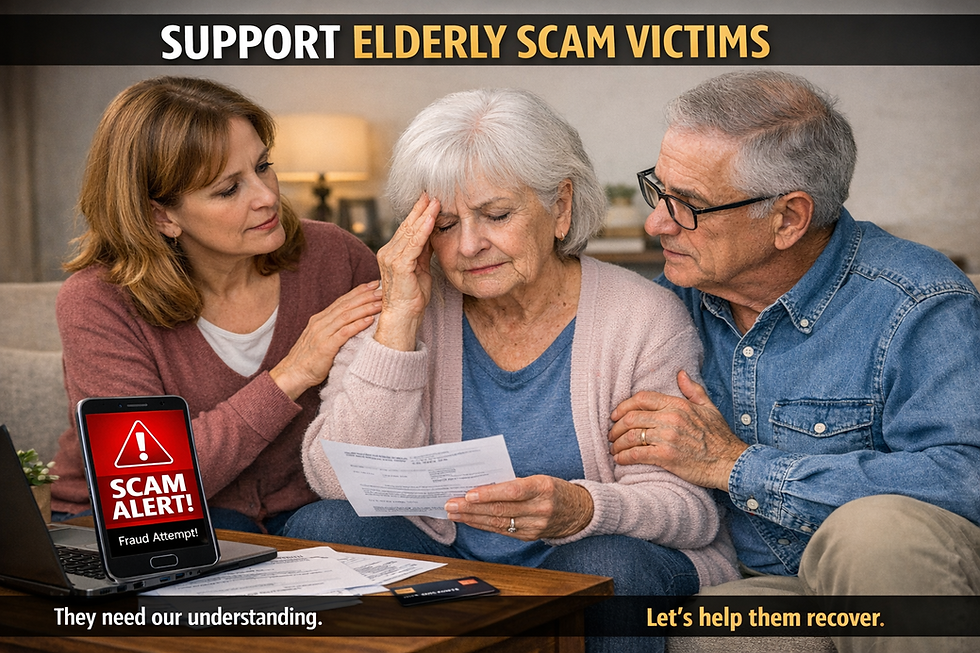
Actionable Advice for Caregivers and Educators
Supporting elderly scam victims—especially those with cognitive decline—requires empathy, patience, and a proactive approach. The following strategies can help you make a meaningful difference:
Communication
Use clear, simple language free of jargon when explaining scams, safety steps, or recovery processes.
Listen actively and validate the person’s feelings, even if they repeat themselves or express anger and frustration.
Encourage storytelling and sharing as a way to process emotions and regain a sense of control.
Prevention
Educate older adults and families about common scam tactics and warning signs.
Encourage skepticism toward unsolicited contacts—calls, emails, or messages requesting money or personal information.
Set up safeguards, such as call blocking, account alerts, and trusted contacts with financial institutions.
Recovery Support
Assist with practical steps like filing reports, contacting banks, and changing passwords.
Break down recovery tasks into manageable steps and offer hands-on help when needed.
Connect victims to peer support groups or counseling services specializing in elder abuse and scam recovery.
Special Considerations for Alzheimer’s
Be patient with memory lapses and repetitive questions; use visual aids and reminders.
Frame safety interventions as collaborative and supportive, not punitive.
Coordinate among all caregivers and family members to ensure consistent routines and messaging.
Conclusion: A Call for Compassion, Advocacy, and Ongoing Support
Elderly scam victims—particularly those with cognitive impairments—face a daunting array of psychological, emotional, and practical challenges. But with the right combination of empathy, education, and support, you can help restore dignity, confidence, and hope. Every conversation, every act of understanding, and every measure of support makes a difference. Let’s commit to breaking the cycle of shame and silence, empowering older adults and their caregivers to recognize, resist, and recover from scams. Together, we can build a safer and more compassionate world for our elders.
dự đoán xổ số miền bắc hôm nay có đáng mất vài phút lướt không? Mình thử rồi, kiểu mở ra xem cho biết thôi mà cuối cùng lại ngồi đọc một đoạn khá lâu vì họ viết đúng trọng tâm: soi cầu XSMB theo ngày, có hẳn bài cho mốc 3 9 2026 nên ai hay xem theo lịch sẽ đỡ phải tự lọc thông tin. Cách trình bày cũng “thẳng ruột ngựa”, tiêu đề tách khối rõ ràng, dưới mỗi heading là vài dòng mô tả ngắn rồi mới tới phần thống kê dự đoán. Đọc lướt cũng hiểu họ đang nói gì. Cuộn xuống là gặp ngay khối “Soi cầu MB ngày 3 9 2026” và “Dự…